Engrasi
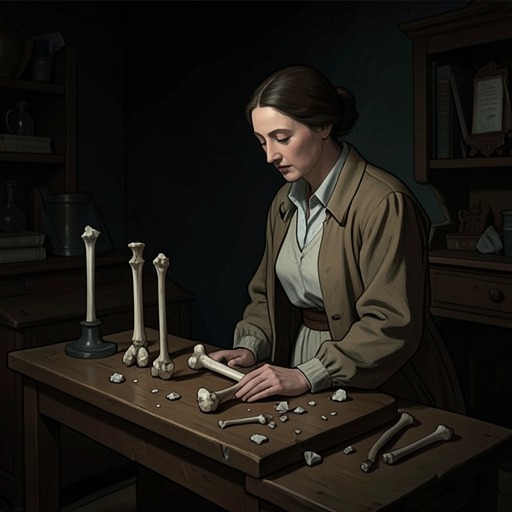
Legado en los huesosEngrasi, Amaia Salazar’s aunt, is both the family’s quiet constant and the person who taught Amaia to read tarot. Her care is expressed in ordinary acts—welcoming Amaia home, singing to Ibai, waiting up when Amaia is late—and in a more wary form of guidance: the cards can reveal what must be known, but opening that door carries risks. She offers Amaia a place of rest and belonging without pretending that either the past or the forces surrounding her niece are harmless.
Identity and Place in the Family
After Amaia returns to Elizondo, Engrasi remains the one person in the family whose routines and manner seem undisturbed by the upheaval caused by Amaia’s return and Víctor’s death. She continues to read tarot, play poker with her friends each afternoon, and meet family trouble with a smile that suggests long experience. That steadiness is not indifference: it gives Amaia a point of continuity while the rest of the family adjusts. Flora moves to Zarautz, ostensibly to film television baking programs, and hands management of Mantecadas Salazar to Ros. Amaia offers Ros help and spends many weekends in Elizondo, but gradually recognizes that her sister no longer needs her support. She still comes to eat with the family and sleep at Engrasi’s house; the visits are not merely practical, but part of a recovered sense of home and roots.
Engrasi’s place in Amaia’s life began in childhood. Amaia recalls that she could rest only in this house. At home, she felt obliged to keep watch; when exhaustion overcame her, sleep remained shallow and fearful, like waiting for an executioner. Engrasi’s home therefore stands in contrast to the vigilance Amaia associates with her own childhood home. It is a refuge made meaningful by the care Engrasi provides, not by any claim that Amaia’s earlier fear can simply be undone.
Care Across Generations
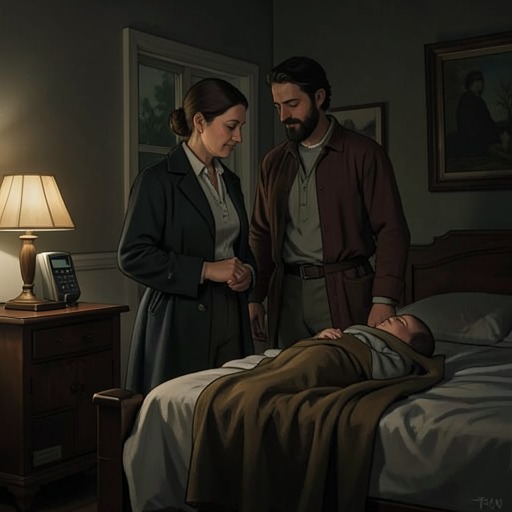
Engrasi’s tenderness extends to Amaia’s son, Ibai. Three months after his birth, Amaia hears her aunt softly singing him the lullaby that Juanita, Amaia’s grandmother, once sang to her. The melody carries Amaia back to Juanita, whose embrace had made her the only woman to hold Amaia during her earliest childhood. By singing the same song to Ibai, Engrasi sustains a line of care across generations: the comfort Amaia received from her grandmother is now offered to her child through her aunt.
Engrasi speaks of Ibai with deep affection, calling him beautiful and saying that there is something special about him. When Amaia jokes that the baby was supposed to be a girl but changed his mind at the last moment, Engrasi responds seriously. During Amaia’s pregnancy, her tarot readings had repeatedly indicated a girl. Near the end, when Amaia seemed unable to choose a name or buy clothes, Engrasi initially supplied a psychologically plausible explanation, but privately worried that the baby might not be born. The cards then refused to disclose the child’s sex. When James called her in the early hours after the birth, they showed a boy. Amaia questions whether a child could change sex so late in pregnancy; Engrasi’s account preserves the mystery rather than settling it. Her certainty is spiritual, while Amaia’s response remains skeptical.
Tarot and Its Boundaries
Engrasi is not simply a source of reassurance: she treats tarot as a practice with rules and consequences. When Amaia needs answers, Engrasi takes from a cupboard a small parcel wrapped in black silk that holds her deck. She reminds Amaia that a reader must know what questions are being asked. Amaia, however, says she does not yet know the questions and needs to speak with an FBI expert in criminal behavior to clarify them. Engrasi warns that Amaia is dealing with matters beyond her reach. Their disagreement is not a rejection of care; it marks a difference in method. Amaia seeks investigative knowledge, while Engrasi understands the cards as a threshold that should not be approached casually.
In a later reading, Engrasi lays out twelve cards in a wheel. The Empress dominates the spread, and she tells Amaia that the card reflects the woman she has become and the strength that carried her through hardship. Another card suggests a new aspect of Amaia opened during the preceding year, after she passed through an extraordinary experience that changed her. Amaia’s attention turns to the amber eyes she remembers from the forest. Engrasi says the events were not mere chance, then touches another card and recoils as though startled: this, she says, has never been shown to her before. The reading joins Amaia’s personal transformation to the uncanny without explaining either away.
Engrasi’s caution becomes especially pointed when Amaia later approaches the deck herself. Drawn to the black-silk parcel behind the glass doors of the cabinet, Amaia takes it, unties it, and shuffles while reviewing the evidence and unfinished hypotheses in her investigation. Engrasi tells her to shuffle, and the cards are arranged in a cross. As Amaia turns them over, she grows increasingly distressed; afterward, she sees some cards still face-up and reproaches herself for trying to anticipate fate. Engrasi’s teaching is that the cards are a door: a reading should be opened deliberately and closed when finished, because what passes through may cause harm. The ritual offers knowledge, but not mastery.
The Past Engrasi Remembers
Engrasi’s warnings arise partly from what she has witnessed in Amaia. She remembers Amaia arriving at her house at nine years old and laying out tarot cards as though she had always known how. Amaia had just endured humiliation and injury, and Engrasi recalls that a terrible presence seemed to gather around her. She says she saw something comparable only once afterward, when Víctor was involved. In her view, Amaia’s instinct for tracking evil is frightening, and the work she has chosen may have been inevitable. Yet Engrasi does not call her cursed. She believes that protective forces surround Amaia as surely as hostile ones do, and urges caution rather than surrender to fear.
Engrasi is candid about the limits of her own knowledge. When Amaia asks what she remembers of the time of her birth, Engrasi explains that she was living in Paris and had little contact with people in Elizondo; by the time she returned, Amaia was about four. She suggests that Juanita may have told Amaia more, but does not claim memories she does not possess. Her authority, then, is not omniscience. It rests on a combination of careful observation, long familiarity with Amaia, and a willingness to mark what remains unknown.
A Vigilant Refuge
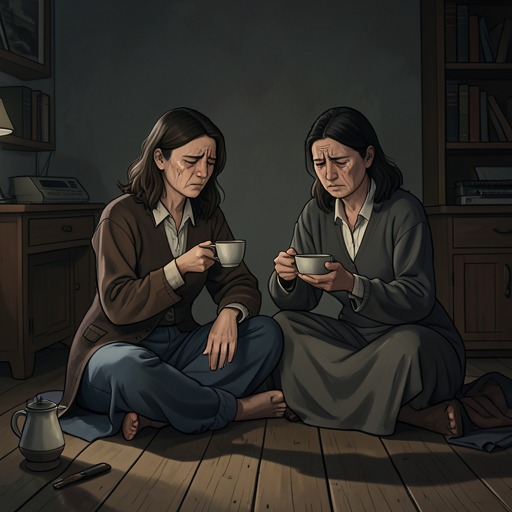
Even as an adult, Amaia returns to Engrasi’s house and finds her waiting by the fire. Engrasi may have fallen asleep in the chair, but she wakes to question Amaia about coming home so late. She explains that she cannot sleep while Amaia is out working, because the cases that reach her niece seem to exceed what some people consider normal. Her concern is protective, but not detached from the uncanny: she recognizes a pattern in the dangers Amaia faces and fears for her.
When Amaia asks whether the dead can do anything, Engrasi answers that they can do what they are able to do. The brief response reflects the balance that defines her counsel. She neither promises that the dead can intervene freely nor dismisses the possibility of their agency. Across lullabies, tarot readings, warnings, and late-night waiting, Engrasi remains a mentor whose care is practical and spiritual at once. She cannot remove Amaia’s fear or explain every mystery, but she gives her a place to return, a language for approaching what cannot be controlled, and a reminder to close the door when the reading is over.